> ## Documentation Index
> Fetch the complete documentation index at: https://dragonwingdocs.qualcomm.com/llms.txt
> Use this file to discover all available pages before exploring further.
# LPDDR Memory
The Qualcomm Dragonwing IQ-9075 features an advanced memory subsystem designed for high-performance computing applications.
## Specifications
| Specification | Details |
| ------------------- | ------------------------------ |
| **Memory Type** | LPDDR5X / LPDDR5 SDRAM |
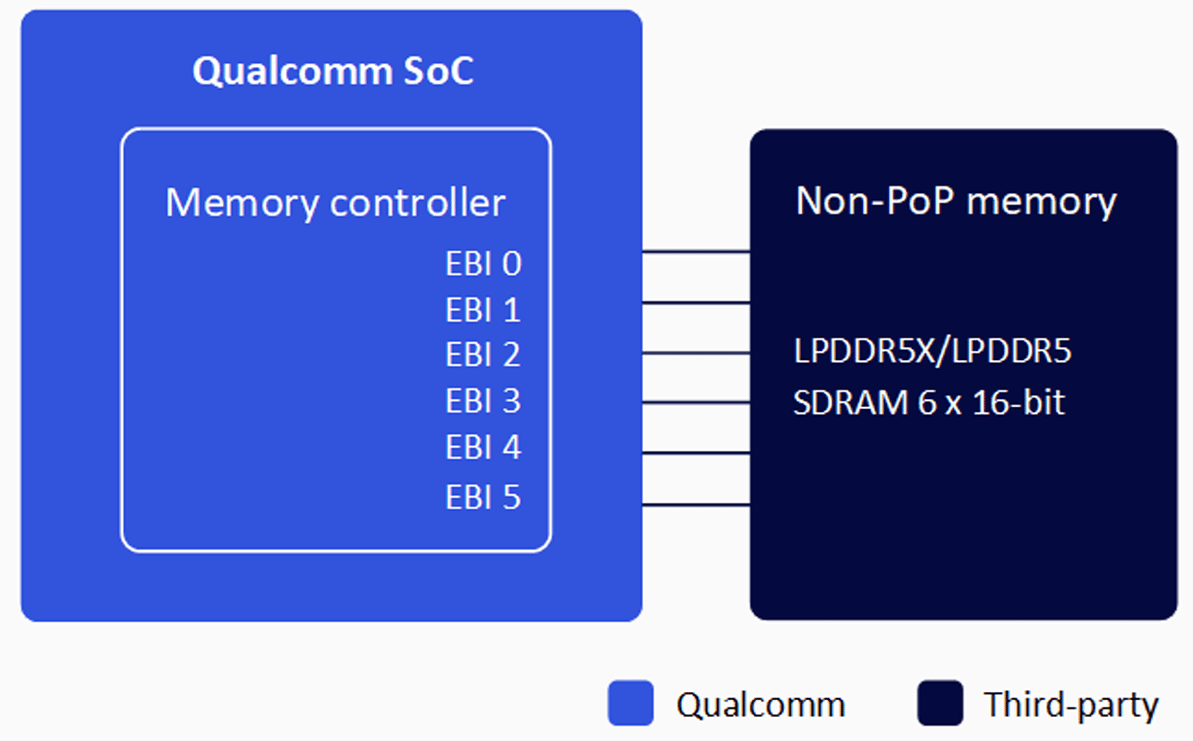
| **Configuration** | Six-channel non-PoP |
| **Maximum Density** | 36 GB |
| **Clock Speed** | Up to 3200 MHz |
| **Data Width** | 6 × 16-bit (96-bit total) |
| **Standards** | JEDEC LPDDR5X/LPDDR5 compliant |
## Architecture
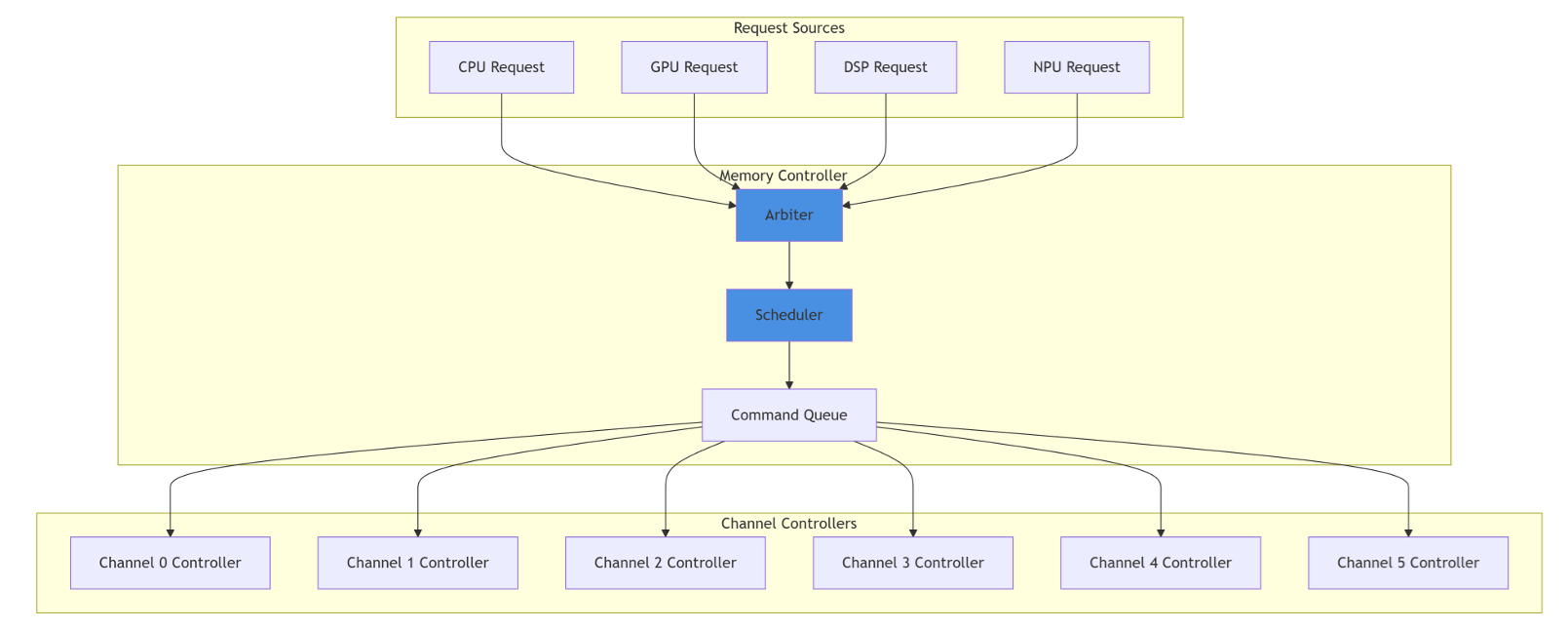
The IQ-9075 memory controller supports high-bandwidth, low-latency operations across six independent 16-bit channels with dynamic frequency scaling for power optimization.
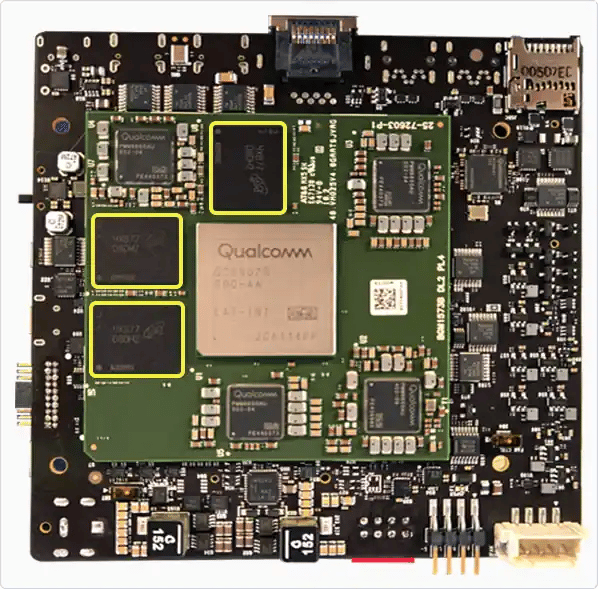
The IQ-9075M module has three 12 GB LPDDR5 SDRAM ICs:
 ### Supported DRAM Components
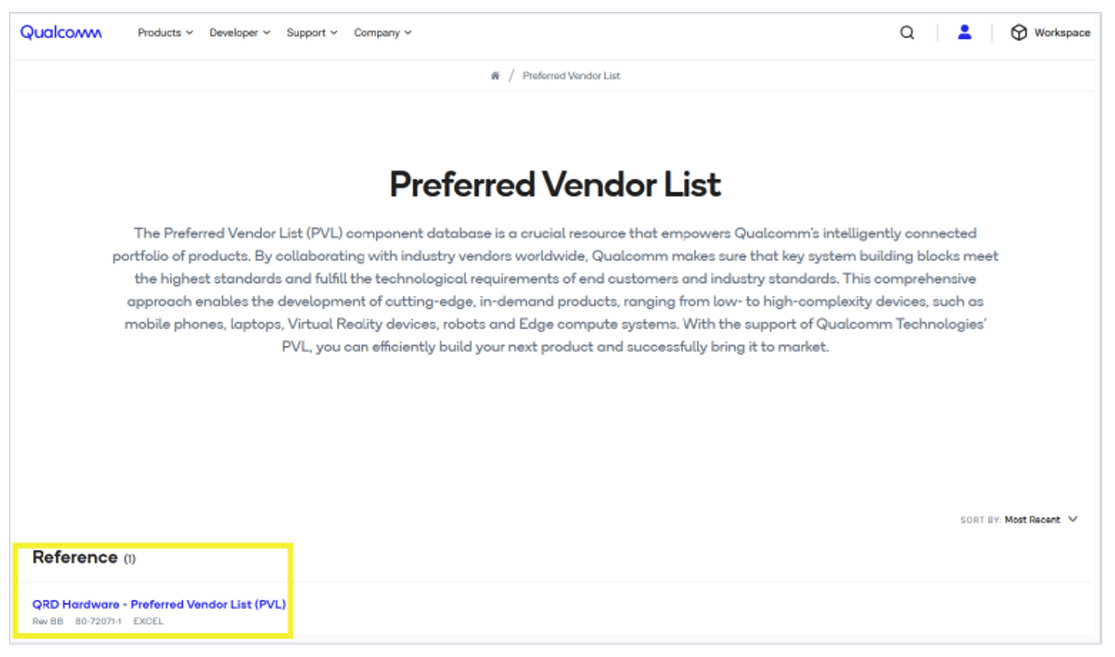
All DRAM components must be selected from the Qualcomm Preferred Vendor List (PVL).
Navigate to the [Qualcomm PVL](https://www.qualcomm.com/preferred-vendor-list) and sign in with your Qualcomm account.
Download the **QRD Hardware - Preferred Vendor List (PVL)** Excel file.
Filter by **Type: Memory** and **Chipset: IQ-9075**.
### Supported DRAM Components
All DRAM components must be selected from the Qualcomm Preferred Vendor List (PVL).
Navigate to the [Qualcomm PVL](https://www.qualcomm.com/preferred-vendor-list) and sign in with your Qualcomm account.
Download the **QRD Hardware - Preferred Vendor List (PVL)** Excel file.
Filter by **Type: Memory** and **Chipset: IQ-9075**.
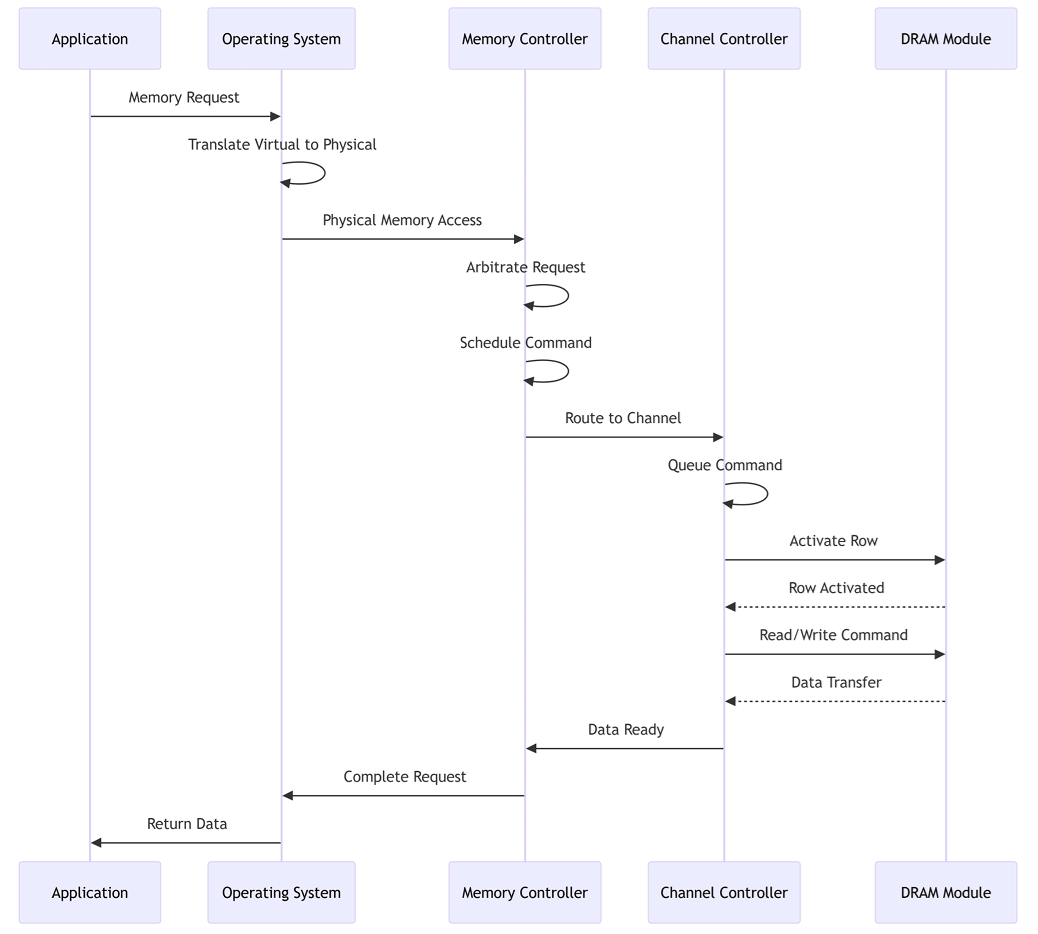
 ## Initialization

 ## Setup and Configuration
### Prerequisites
* IQ-9075 development board with PVL-compliant LPDDR5X or LPDDR5 DRAM
* Canonical Ubuntu software package
* XBL bootloader with DSF (DDR System Firmware)
* UART debug cable and SSH access
### Initial Setup
Confirm your DRAM part number is listed in the Qualcomm PVL for IQ-9075.
```bash theme={null}
fastboot flash xbl xbl.elf
fastboot flashall
```
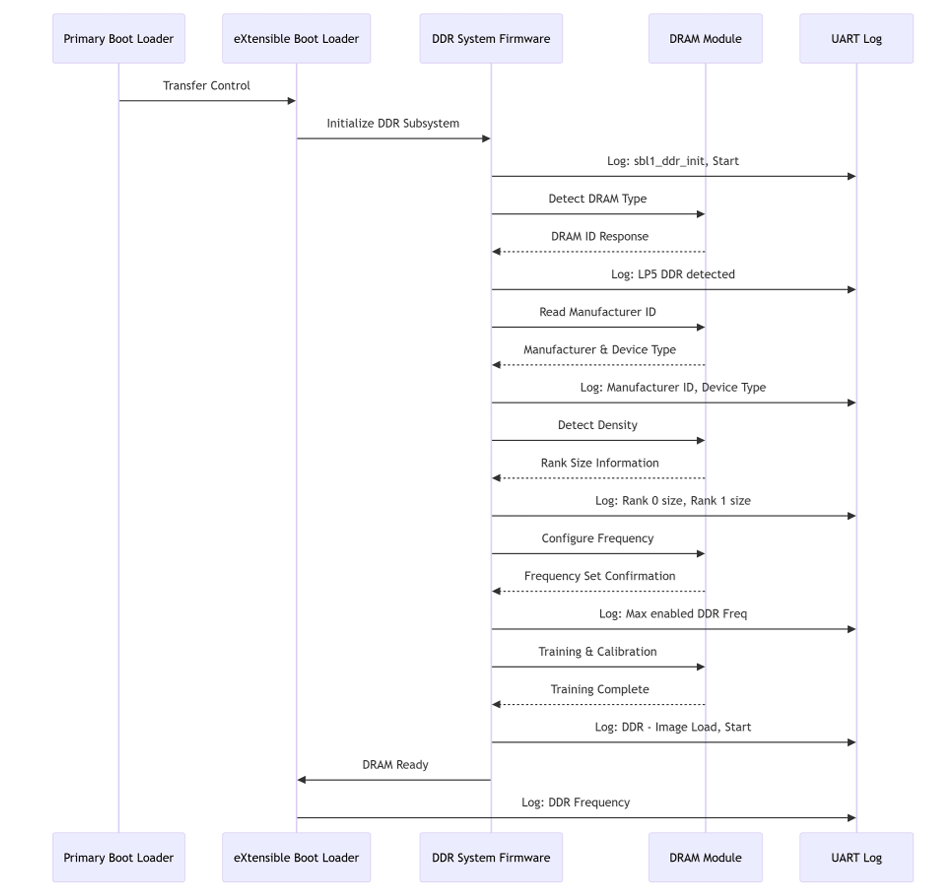
Connect UART console (115200 baud, 8N1) and watch for initialization messages:
* `sbl1_ddr_init, Start`
* `LP5 DDR detected`
* `Manufacturer ID = XXXX, Device Type = XXXX`
* `Rank 0 size = XXXX MB, Rank 1 size = XXXX MB`
* `Max enabled DDR Freq = 3200 MHz`
### Frequency Scaling
```bash theme={null}
# Check current DRAM frequency
cat /sys/class/devfreq/soc:qcom,cpu-llcc-ddr-bw/cur_freq
# List available frequencies
cat /sys/class/devfreq/soc:qcom,cpu-llcc-ddr-bw/available_frequencies
# Set specific frequency (requires root)
echo > /sys/class/devfreq/soc:qcom,cpu-llcc-ddr-bw/userspace/set_freq
```
### Memory Bandwidth Monitoring
```bash theme={null}
cat /sys/class/devfreq/soc:qcom,cpu-llcc-ddr-bw/cur_freq
cat /sys/class/devfreq/soc:qcom,cpu-llcc-ddr-bw/load
cat /proc/meminfo
```
## Debugging
### Boot Log Analysis
| Log Entry | Description | Action if Missing |
| ----------------------------------- | -------------------------- | ----------------------------------- |
| `sbl1_ddr_init, Start` | DRAM initialization begins | Check XBL image integrity |
| ` DDR detected` | DRAM type detected | Verify DRAM component compatibility |
| `Manufacturer ID = ` | DRAM identification | Cross-reference with PVL |
| `Rank 0 size = MB` | Density detection | Check DRAM module installation |
| `Max enabled DDR Freq = MHz` | Maximum frequency | Verify frequency configuration |
| `DDR Frequency, MHz` | Operating frequency set | Verify frequency matches spec |
```bash theme={null}
# Search boot log for DRAM entries
grep -i "ddr\|dram\|memory" boot.log
# Check for errors
grep -i "error\|fail\|panic" boot.log
```
### Diagnostic Commands
```bash theme={null}
# Check DRAM detection in boot logs
dmesg | grep -i ddr
dmesg | grep -i memory
# Display memory information
cat /proc/meminfo
# Verify operating frequency
cat /sys/class/devfreq/soc:qcom,cpu-llcc-ddr-bw/cur_freq
# Check kernel memory map
cat /proc/iomem | grep -i memory
# Check for ECC errors
dmesg | grep -i ecc
cat /sys/devices/system/edac/mc/mc*/ce_count
cat /sys/devices/system/edac/mc/mc*/ue_count
```
## Troubleshooting
**Symptoms:** No DRAM detection in UART logs; boot hangs at XBL stage.
**Steps:**
* Verify DRAM modules are properly seated with no physical damage
* Measure VDD and VDDQ voltages — ensure they meet JEDEC specifications
* Check for voltage droops during boot
* Verify clock signal presence and data line connectivity
**Resolution:** Reseat DRAM modules, fix power supply issues, or contact Qualcomm support.
**Symptoms:** Detected type doesn't match installed component; incorrect manufacturer ID; wrong memory size.
**Steps:**
* Check log for `Manufacturer ID = , Device Type = `
* Verify DRAM part number against PVL
* Inspect physical markings on DRAM chips
**Resolution:** Replace with PVL-approved component; verify procurement source for authenticity.
**Symptoms:** Boot hangs after DRAM detection; training/calibration failures; intermittent boot failures.
**Steps:**
* Check temperature (must be within spec) and voltage stability
* Measure signal quality on all channels; verify impedance matching
* Try booting at a lower frequency — success indicates signal integrity issue
**Resolution:** Improve signal integrity (routing, termination); adjust timing parameters (contact Qualcomm).
**Symptoms:** Random application crashes, kernel panics, data corruption.
**Steps:**
```bash theme={null}
# Monitor for errors
dmesg -w | grep -i "corruption\|error"
# Check DRAM temperature
cat /sys/class/thermal/thermal_zone*/temp
```
**Resolution:** Improve thermal management, fix power supply issues, replace failing DRAM modules.
**Symptoms:** Memory bandwidth lower than expected; high latency; system performance degradation.
**Steps:**
```bash theme={null}
# Check current frequency (should be up to 3200 MHz)
cat /sys/class/devfreq/soc:qcom,cpu-llcc-ddr-bw/cur_freq
# Check governor and throttling
cat /sys/class/devfreq/soc:qcom,cpu-llcc-ddr-bw/governor
cat /sys/class/thermal/thermal_zone*/temp
```
**Resolution:** Set performance governor, improve cooling, verify DRAM component supports full speed.
**Symptoms:** Less memory than installed; out-of-memory errors; allocation failures.
**Steps:**
```bash theme={null}
# Check total memory (should show up to 36 GB)
cat /proc/meminfo | grep MemTotal
# Check reserved regions
cat /proc/iomem | grep -i reserved
# Identify memory consumers
ps aux --sort=-%mem | head -20
```
**Resolution:** Verify all DRAM modules are detected; review reserved memory configuration; fix memory leaks.
## Performance Optimization
### Frequency Governor
```bash theme={null}
# Maximum performance
echo performance > /sys/class/devfreq/soc:qcom,cpu-llcc-ddr-bw/governor
# Power-optimized
echo ondemand > /sys/class/devfreq/soc:qcom,cpu-llcc-ddr-bw/governor
# Manual frequency
echo userspace > /sys/class/devfreq/soc:qcom,cpu-llcc-ddr-bw/governor
echo 3200000000 > /sys/class/devfreq/soc:qcom,cpu-llcc-ddr-bw/userspace/set_freq
```
### Cache and Access Patterns
```bash theme={null}
# Check cache configuration
cat /sys/devices/system/cpu/cpu*/cache/index*/size
cat /sys/devices/system/cpu/cpu*/cache/index*/type
```
Best practices:
* Prefer sequential over random memory access
* Align data structures to cache line boundaries
* Pre-allocate memory when possible to minimize allocation overhead
* Use huge pages for large allocations
### Monitoring
```bash theme={null}
# Real-time memory usage
watch -n 1 free -h
# Bandwidth load
cat /sys/class/devfreq/soc:qcom,cpu-llcc-ddr-bw/load
# Cache miss profiling
perf stat -e cache-misses,cache-references
```
## Resources
| Resource | URL |
| ------------------------ | ------------------------------------------------------------------------------------------------------------------------------------------------------------------------------------------ |
| JEDEC LPDDR Standards | [https://www.jedec.org/category/technology-focus-area/mobile-memory-lpddr-wide-io-memory-mcp](https://www.jedec.org/category/technology-focus-area/mobile-memory-lpddr-wide-io-memory-mcp) |
| Qualcomm PVL | [https://www.qualcomm.com/preferred-vendor-list](https://www.qualcomm.com/preferred-vendor-list) |
| Qualcomm Software Center | [https://softwarecenter.qualcomm.com/#/](https://softwarecenter.qualcomm.com/#/) |
## Setup and Configuration
### Prerequisites
* IQ-9075 development board with PVL-compliant LPDDR5X or LPDDR5 DRAM
* Canonical Ubuntu software package
* XBL bootloader with DSF (DDR System Firmware)
* UART debug cable and SSH access
### Initial Setup
Confirm your DRAM part number is listed in the Qualcomm PVL for IQ-9075.
```bash theme={null}
fastboot flash xbl xbl.elf
fastboot flashall
```
Connect UART console (115200 baud, 8N1) and watch for initialization messages:
* `sbl1_ddr_init, Start`
* `LP5 DDR detected`
* `Manufacturer ID = XXXX, Device Type = XXXX`
* `Rank 0 size = XXXX MB, Rank 1 size = XXXX MB`
* `Max enabled DDR Freq = 3200 MHz`
### Frequency Scaling
```bash theme={null}
# Check current DRAM frequency
cat /sys/class/devfreq/soc:qcom,cpu-llcc-ddr-bw/cur_freq
# List available frequencies
cat /sys/class/devfreq/soc:qcom,cpu-llcc-ddr-bw/available_frequencies
# Set specific frequency (requires root)
echo > /sys/class/devfreq/soc:qcom,cpu-llcc-ddr-bw/userspace/set_freq
```
### Memory Bandwidth Monitoring
```bash theme={null}
cat /sys/class/devfreq/soc:qcom,cpu-llcc-ddr-bw/cur_freq
cat /sys/class/devfreq/soc:qcom,cpu-llcc-ddr-bw/load
cat /proc/meminfo
```
## Debugging
### Boot Log Analysis
| Log Entry | Description | Action if Missing |
| ----------------------------------- | -------------------------- | ----------------------------------- |
| `sbl1_ddr_init, Start` | DRAM initialization begins | Check XBL image integrity |
| ` DDR detected` | DRAM type detected | Verify DRAM component compatibility |
| `Manufacturer ID = ` | DRAM identification | Cross-reference with PVL |
| `Rank 0 size = MB` | Density detection | Check DRAM module installation |
| `Max enabled DDR Freq = MHz` | Maximum frequency | Verify frequency configuration |
| `DDR Frequency, MHz` | Operating frequency set | Verify frequency matches spec |
```bash theme={null}
# Search boot log for DRAM entries
grep -i "ddr\|dram\|memory" boot.log
# Check for errors
grep -i "error\|fail\|panic" boot.log
```
### Diagnostic Commands
```bash theme={null}
# Check DRAM detection in boot logs
dmesg | grep -i ddr
dmesg | grep -i memory
# Display memory information
cat /proc/meminfo
# Verify operating frequency
cat /sys/class/devfreq/soc:qcom,cpu-llcc-ddr-bw/cur_freq
# Check kernel memory map
cat /proc/iomem | grep -i memory
# Check for ECC errors
dmesg | grep -i ecc
cat /sys/devices/system/edac/mc/mc*/ce_count
cat /sys/devices/system/edac/mc/mc*/ue_count
```
## Troubleshooting
**Symptoms:** No DRAM detection in UART logs; boot hangs at XBL stage.
**Steps:**
* Verify DRAM modules are properly seated with no physical damage
* Measure VDD and VDDQ voltages — ensure they meet JEDEC specifications
* Check for voltage droops during boot
* Verify clock signal presence and data line connectivity
**Resolution:** Reseat DRAM modules, fix power supply issues, or contact Qualcomm support.
**Symptoms:** Detected type doesn't match installed component; incorrect manufacturer ID; wrong memory size.
**Steps:**
* Check log for `Manufacturer ID = , Device Type = `
* Verify DRAM part number against PVL
* Inspect physical markings on DRAM chips
**Resolution:** Replace with PVL-approved component; verify procurement source for authenticity.
**Symptoms:** Boot hangs after DRAM detection; training/calibration failures; intermittent boot failures.
**Steps:**
* Check temperature (must be within spec) and voltage stability
* Measure signal quality on all channels; verify impedance matching
* Try booting at a lower frequency — success indicates signal integrity issue
**Resolution:** Improve signal integrity (routing, termination); adjust timing parameters (contact Qualcomm).
**Symptoms:** Random application crashes, kernel panics, data corruption.
**Steps:**
```bash theme={null}
# Monitor for errors
dmesg -w | grep -i "corruption\|error"
# Check DRAM temperature
cat /sys/class/thermal/thermal_zone*/temp
```
**Resolution:** Improve thermal management, fix power supply issues, replace failing DRAM modules.
**Symptoms:** Memory bandwidth lower than expected; high latency; system performance degradation.
**Steps:**
```bash theme={null}
# Check current frequency (should be up to 3200 MHz)
cat /sys/class/devfreq/soc:qcom,cpu-llcc-ddr-bw/cur_freq
# Check governor and throttling
cat /sys/class/devfreq/soc:qcom,cpu-llcc-ddr-bw/governor
cat /sys/class/thermal/thermal_zone*/temp
```
**Resolution:** Set performance governor, improve cooling, verify DRAM component supports full speed.
**Symptoms:** Less memory than installed; out-of-memory errors; allocation failures.
**Steps:**
```bash theme={null}
# Check total memory (should show up to 36 GB)
cat /proc/meminfo | grep MemTotal
# Check reserved regions
cat /proc/iomem | grep -i reserved
# Identify memory consumers
ps aux --sort=-%mem | head -20
```
**Resolution:** Verify all DRAM modules are detected; review reserved memory configuration; fix memory leaks.
## Performance Optimization
### Frequency Governor
```bash theme={null}
# Maximum performance
echo performance > /sys/class/devfreq/soc:qcom,cpu-llcc-ddr-bw/governor
# Power-optimized
echo ondemand > /sys/class/devfreq/soc:qcom,cpu-llcc-ddr-bw/governor
# Manual frequency
echo userspace > /sys/class/devfreq/soc:qcom,cpu-llcc-ddr-bw/governor
echo 3200000000 > /sys/class/devfreq/soc:qcom,cpu-llcc-ddr-bw/userspace/set_freq
```
### Cache and Access Patterns
```bash theme={null}
# Check cache configuration
cat /sys/devices/system/cpu/cpu*/cache/index*/size
cat /sys/devices/system/cpu/cpu*/cache/index*/type
```
Best practices:
* Prefer sequential over random memory access
* Align data structures to cache line boundaries
* Pre-allocate memory when possible to minimize allocation overhead
* Use huge pages for large allocations
### Monitoring
```bash theme={null}
# Real-time memory usage
watch -n 1 free -h
# Bandwidth load
cat /sys/class/devfreq/soc:qcom,cpu-llcc-ddr-bw/load
# Cache miss profiling
perf stat -e cache-misses,cache-references
```
## Resources
| Resource | URL |
| ------------------------ | ------------------------------------------------------------------------------------------------------------------------------------------------------------------------------------------ |
| JEDEC LPDDR Standards | [https://www.jedec.org/category/technology-focus-area/mobile-memory-lpddr-wide-io-memory-mcp](https://www.jedec.org/category/technology-focus-area/mobile-memory-lpddr-wide-io-memory-mcp) |
| Qualcomm PVL | [https://www.qualcomm.com/preferred-vendor-list](https://www.qualcomm.com/preferred-vendor-list) |
| Qualcomm Software Center | [https://softwarecenter.qualcomm.com/#/](https://softwarecenter.qualcomm.com/#/) |